

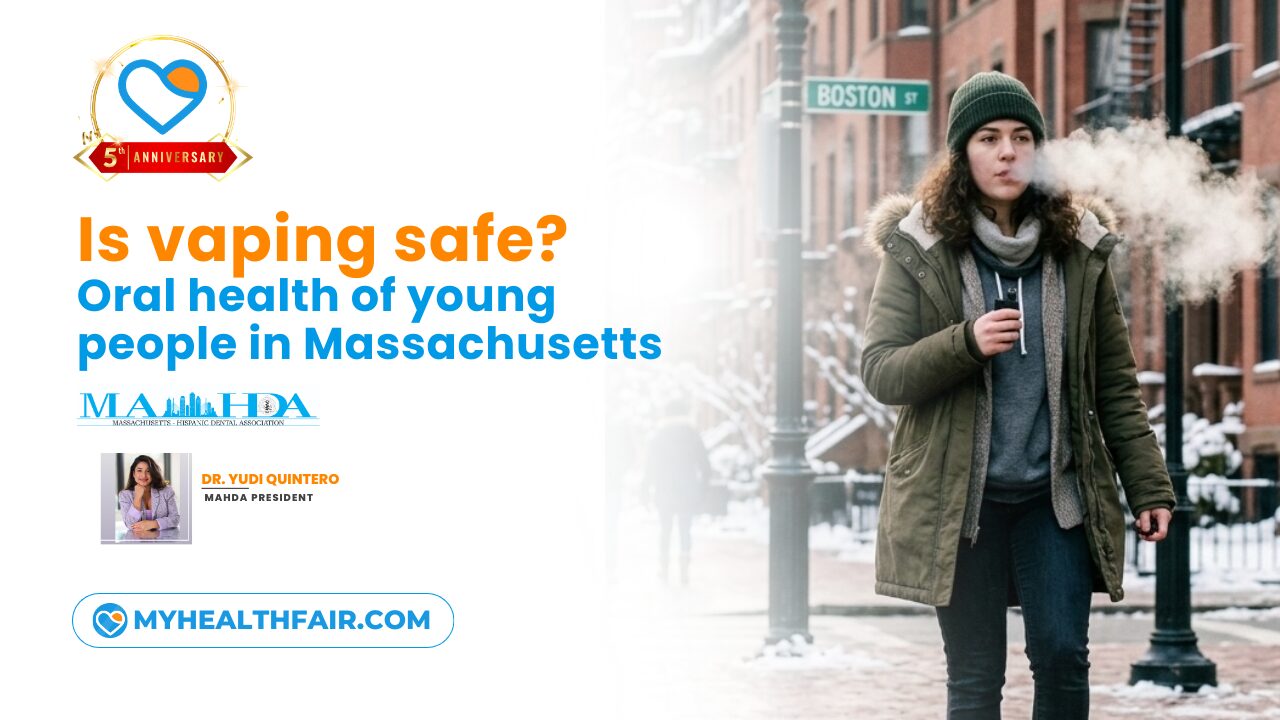
Is Vaping Safe? What You Need to Know About Vaping and Oral Health in Massachusetts
By My Health Fair
Medically reviewed by Dr. Yudi Quintero, oral health specialist
In recent years, vaping has become increasingly popular among teenagers and young adults.
Many people perceive it as a “less harmful” alternative to smoking traditional cigarettes.
However, health professionals and medical organizations are raising concerns about the real effects vaping can have on both oral and overall health.
Is vaping safer than smoking cigarettes?
Although some people believe vaping is a safer alternative to smoking, health experts warn that it is not a risk-free option.
E-cigarettes may contain nicotine, heavy metals, and chemical substances that can harm the lungs, mouth, and other organs.
What does e-cigarette vapor contain?
Many people think vaping produces only “water vapor,” but the reality is different.
E-cigarette aerosols may contain substances that affect the body, such as:
- Formaldehyde and acetaldehyde, substances associated with cancer risk
- Heavy metals such as nickel, lead, and chromium
- Ultrafine particles that can penetrate body tissues
- Nicotine, a highly addictive substance
When liquids such as propylene glycol and glycerin are heated in vaping devices, they can form additional chemical compounds that may irritate or damage cells.
Source: Massachusetts Hispanic Dental Association
How does vaping affect oral health?
Dentists and oral health specialists are observing increasing effects related to vaping, including:
- Gum disease (gingivitis and periodontitis)
- Dry mouth (xerostomia)
- Increased risk of cavities
- Chronic inflammation in oral tissues
- Delayed healing after dental treatments
Dry mouth is particularly concerning because saliva plays an essential role in protecting against bacteria and preventing tooth decay.
Effects on the body: beyond the mouth
Vaping aerosols may also cause biological changes in the body, including:
- Chronic inflammation
- Oxidative stress
- Damage to cellular DNA
Although research is still ongoing, experts warn that the lack of long-term evidence does not mean vaping is safe.
A growing problem among teenagers
One of the greatest concerns is the rise of vaping among young people.
According to the Centers for Disease Control and Prevention (CDC):
- More than 2.1 million middle and high school students in the United States reported using e-cigarettes in 2023.
Many teenagers become dependent on nicotine quickly, which can affect brain development.
In Massachusetts, the Massachusetts Department of Public Health has identified youth vaping as a public health priority due to its growing presence in school communities.
Why is vaping especially dangerous for teenagers?
Nicotine can affect brain development in adolescents and young adults.
In addition, many vaping devices contain high concentrations of nicotine, which can lead to addiction very quickly.
Can vaping cause cancer?
Some studies suggest that e-cigarette vapor may contain carcinogenic substances and produce cellular changes associated with the development of cancer.
Repeated exposure to these substances may have cumulative effects over time, especially when use begins at an early age.
The good news: quitting vaping has benefits
Stopping vaping can lead to significant improvements in health:
- Improves gum health
- Helps partially restore saliva production
- Reduces inflammation in the body
- Lowers future health risks
For teenagers and young adults, quitting nicotine can also improve concentration, sleep, and overall well-being.
Part of this educational information is based on prevention materials developed by the Massachusetts Hispanic Dental Association to promote awareness about the impact of vaping on oral health.

Resources to quit vaping or smoking in Massachusetts
If you or someone in your family wants to quit vaping or tobacco, these resources can help:
Massachusetts Tobacco Cessation and Prevention Program
1-800-QUIT-NOW
quitnow.net/massachusetts
Smokefree Teen
teen.smokefree.gov
Truth Initiative – Quit Vaping Program
truthinitiative.org
American Lung Association
lung.org
CDC – Information about e-cigarettes
cdc.gov/tobacco
Visit the Massachusetts Hispanic Dental Association table at My Health Fair
Oral health professionals will be sharing information about:
- Vaping and oral health
- Prevention of dental diseases
- Resources to quit tobacco
- Tips to protect the health of teenagers and families
